How a Bonus Round Starts: Slot Controls and a First Spin With PHP 500
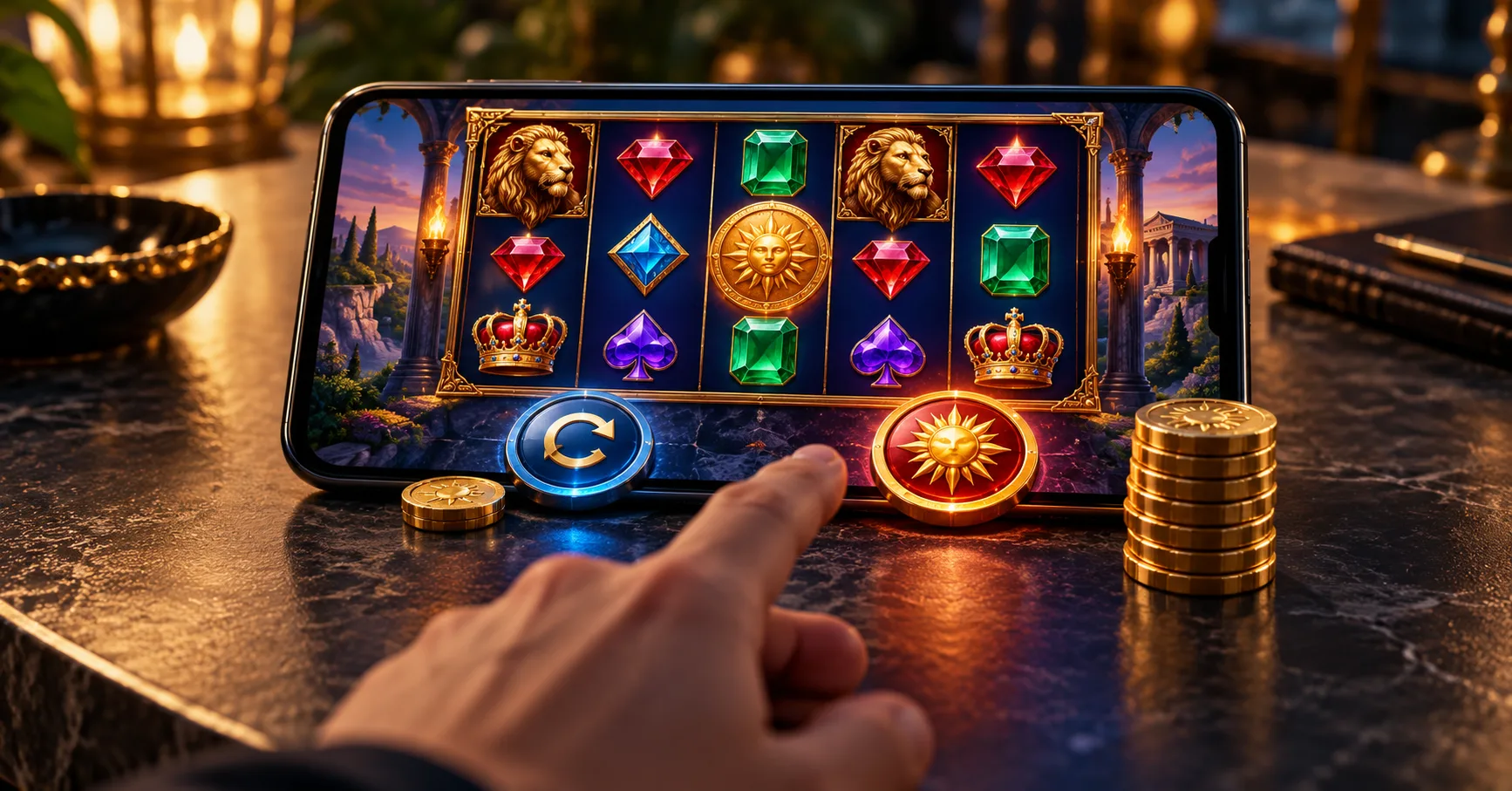
A Bonus round does not automatically mean you can withdraw money without risking your own balance. A feature awarded by a paid spin can still originate from a losing bet. Before pressing anything, distinguish the feature inside the game from a promotional balance attached to your account.
This guide follows a slot-style bonus feature from stake selection through triggering, interaction, and settlement. With roughly PHP 500 available, the useful comparison is between playing ordinary rounds and paying directly for feature entry where that option exists. Each route exposes your balance differently.
Separate the feature from the funds paying for it
An in-game bonus is a change in the game's normal sequence. Depending on the rules, it might introduce additional spins, symbol collection, selections, or a multiplier. Its trigger and payout conditions belong in the game's information panel. A visually similar animation can have different rules in another title.
An account promotion works at a different level. It determines which funds you can use and what conditions apply to them. Entering a Promo Code may activate an account offer, but that action does not establish how symbols trigger a feature.
Likewise, Free Credits may fund eligible play without changing the game's symbol rules. A feature result and a withdrawable balance are separate questions. Check the game rules for the former and the promotion terms for the latter.
For a first session, using a clearly identified cash balance makes the round arithmetic easier to follow. Promotional funds can add restrictions that require a second set of checks. Extra playing funds are useful only when their conditions fit the play you already intended.
Read the trigger as a complete condition
A bonus symbol is meaningful only in combination with its qualifying rule. Counting symbols alone can be misleading when their positions also matter. Read the full condition before interpreting a near miss as progress toward entry.
- Check whether entry requires symbols anywhere on the reels, on particular reels, or in another arrangement described by the game's rules.
- Identify whether qualifying symbols must appear together in one result or accumulate across rounds under an explicitly described collection mechanic.
- Read whether the trigger awards a fixed feature, opens a selection screen, or sends you to another stage with separate instructions.
- Check whether additional qualifying symbols change the award, since a larger trigger only matters when the rules assign it an effect.
- Find the feature's ending condition, including whether extra spins, renewed counters, or other extensions can occur during the sequence.
These details let you predict what should happen when a qualifying result appears. Suppose the rules require symbols on specific reels. The same number elsewhere does not meet that condition. An animation that highlights those symbols does not override the written arrangement.
A collection meter deserves similar attention. Treat it as persistent progress only when the rules say it carries forward. Its appearance alone cannot establish whether changing stake, leaving the game, or ending a session preserves it.
Map each control to the decision it changes
The stake control changes your financial exposure before a paid round begins. The information control explains how that round is evaluated. Keeping those jobs separate prevents a common mistake: experimenting with a money-changing button while trying to learn the interface.
- Use the information or paytable control to inspect symbol awards, qualifying combinations, feature instructions, and how the displayed payouts relate to your stake.
- Use the stake selector to review the total round cost, including any enabled extra bet, before returning to the main play screen.
- Use the spin control to submit the displayed paid round, then wait for its result and any linked feature to settle.
- If autoplay is available, inspect its stopping settings before activation; consecutive rounds can spend your allowance before you review each result.
- If a speed control is available, check its description; faster presentation alone does not establish different triggering conditions or a better payout.
- If feature purchase is available, open its price and rules before confirmation, because the entry charge may differ substantially from one ordinary stake.
Manual spins suit a first inspection because each settlement creates a natural pause. Autoplay can reduce repeated tapping, but it also removes those pauses. With PHP 500, the ability to notice a mistaken stake is more useful than moving quickly through rounds.
A button labelled collect also needs its surrounding explanation. It might acknowledge an award, end a feature, or offer an alternative to another risk. Read the choice before pressing it. Its label alone does not mean money is being withdrawn to your payment account.
Follow one paid round through its final settlement
Your first round is easiest to understand when you follow the balance and the game state together. The balance shows what has been charged or credited. The game state shows whether the paid round has finished or still includes an unresolved feature.
- Open the rules and identify the trigger, award calculation, and feature ending condition before committing any part of your session allowance.
- Select an affordable total stake and confirm that optional extra bets or other paid settings have not increased the displayed round cost.
- Note your starting playable balance, press spin once, and allow the reels and any qualifying feature transition to finish appearing.
- If the feature opens, read its instructions and distinguish required acknowledgements from choices that change an award or introduce another charge.
- Complete the feature's permitted actions, then compare its final award with the settled balance and the round history where available.
- Recheck the stake before another paid spin, and stop if the remaining allowance has reached the limit you chose before playing.
Inside the feature, a selection screen can represent several different mechanisms. A choice may reveal a concealed award or select between rule-defined feature variants. Do not infer the mechanism from the artwork. Use the instructions to determine what your input actually changes.
Where alternatives have different published rules, compare their conditions rather than their visual excitement. An option with more feature spins is not necessarily worth more than one with fewer spins and different multipliers. The complete payout structure determines the comparison.
Trace a trigger, an award, and the remaining pesos
This hypothetical worked example assumes a PHP 500 cash balance and a PHP 5 total stake. Assume three qualifying symbols trigger four feature spins. Also assume those spins carry no additional charge, every displayed multiplier applies to the PHP 5 stake, and there are no promotional restrictions.

- Start with PHP 500 and submit one PHP 5 paid spin, leaving PHP 495 before any award from that round.
- Assume the triggering spin pays nothing directly but meets the three-symbol entry condition, opening the four feature spins without another deduction.
- Assume the feature spins award 0x, 2x, 0x, and 4x the stake, producing a combined multiplier total of 6x.
- Multiply the PHP 5 stake by 6 to calculate a PHP 30 feature award, then add that award to PHP 495.
- Read the settled balance as PHP 525, which represents a PHP 25 net increase after accounting for the original PHP 5 charge.
The PHP 30 award and PHP 25 profit describe different things. The award is the amount credited from the feature. The profit also accounts for the paid spin that started it. Confusing them overstates what the round earned.
Now change one assumption: suppose all four feature spins award zero. The settled balance remains PHP 495, producing a PHP 5 loss. Triggering the feature therefore does not establish profitability. Its actual awards still decide the result.
Compare ordinary entry with a direct feature purchase
Ordinary spins spread spending across separate paid rounds, each evaluated under the game's rules. A feature purchase concentrates spending into immediate entry under its purchase conditions. It buys access to the specified sequence, not a promise that the sequence will recover its price.
Consider another hypothetical comparison using the same PHP 500 allowance. At PHP 5 per ordinary spin, twenty losing spins would consume PHP 100. A hypothetical PHP 100 feature purchase would commit that amount at once. Equal spending does not make their potential outcomes equivalent.
Ordinary play is the better fit when your priority is learning the controls while retaining opportunities to stop between small commitments. Direct entry can suit someone specifically choosing to experience the feature, provided its full price fits an amount they are prepared to lose.
Neither route becomes better value merely because it looks more active. Without a rule-based payout comparison, you cannot infer which offers a better expected return. For a small budget, start with the commitment you can control: the charge you authorize before the next result appears.