Fishing Game Controls and First Round: How Each Shot Changes Your Balance
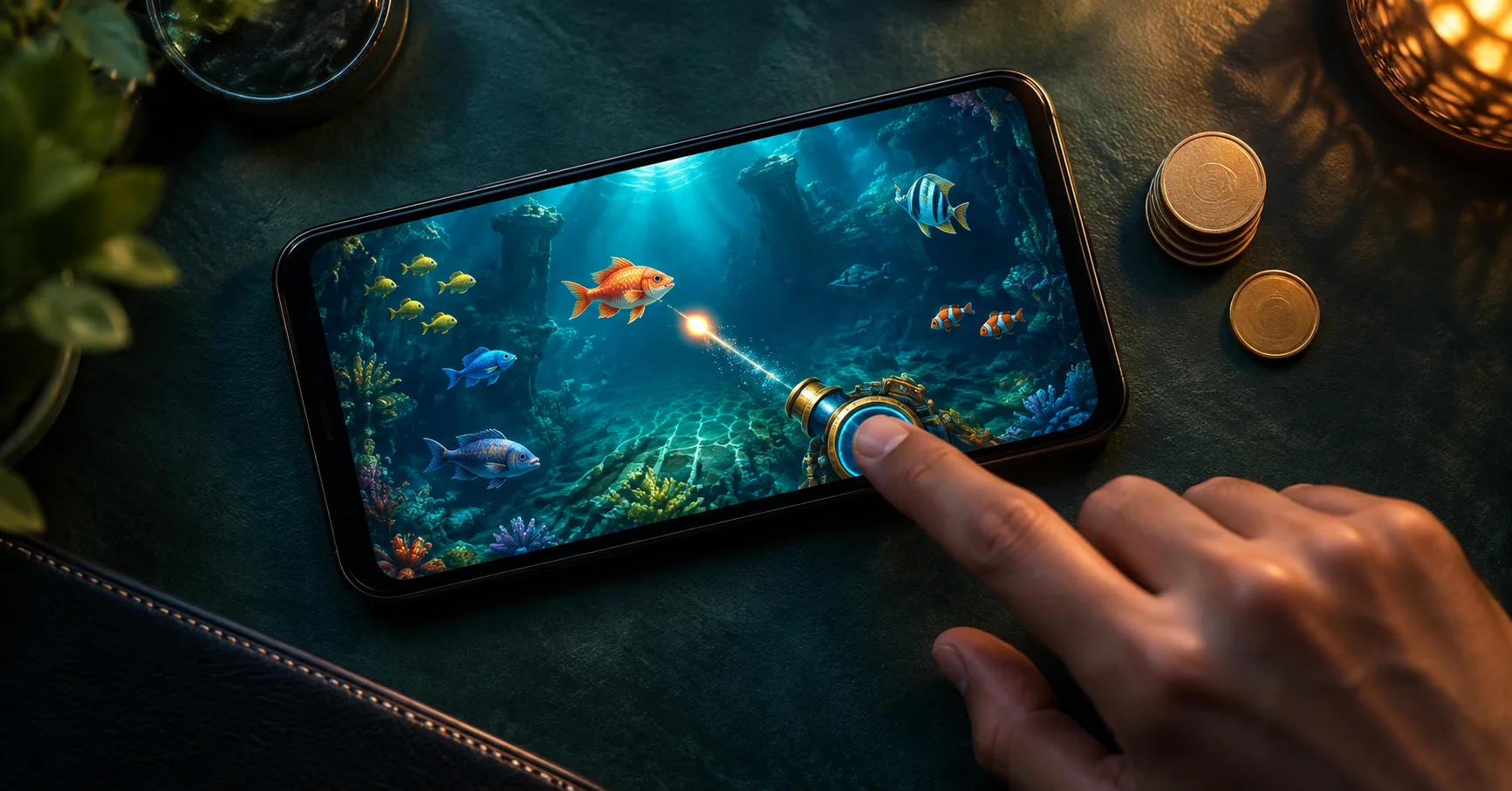
In a Fishing Game, a shot usually costs money when you fire it, whether or not you catch a fish. That rule matters more to a player with PHP 500 than the size of the busiest target on the screen. The controls decide your shot cost and where you aim; the game decides whether a registered hit becomes a catch.
Fishing games vary, so the screen in front of you is the authority on its controls and displayed values. This guide takes apart a common cannon-style round and shows how to read each result. By the end, you should be able to calculate what happened to your balance after any sequence of shots, even when you cannot predict which fish the game will award.
Read the screen before spending a shot
Most cannon-style fishing games show moving fish, a cannon near the edge of the play area, and a control for firing. A stake or cannon-value control sets what one shot costs. Some games add automatic fire, target lock, or weapons that behave differently from an ordinary shot. Their labels and costs need checking before use.
Look for these parts of the interface while the game is idle. The exact layout can change, but each part answers a different question about the next action:
The balance display shows the funds currently available to the game; check which balance will pay for the next shot.
The cannon-value control sets the displayed cost per ordinary shot and may also affect how a captured fish pays.
The aiming area determines the direction of a manual shot, although a projectile reaching a fish does not guarantee a catch.
The fire control launches a shot; holding it down may launch repeated shots if that behavior is enabled.
The fish-value display shows a possible award or multiplier, whose meaning must be read alongside the selected cannon value.
A value beside a fish is only useful after you know its unit. A displayed multiplier of eight, for example, is different from a fixed award of PHP 8. If the game does not make that distinction clear, avoid calculating a return from the fish graphic alone. Also find the pause or exit control before firing, especially if automatic fire is available.
Aim, fire, and interpret a hit
A manual round begins with a selected shot value and an aim point. Firing reduces the usable balance by the shot cost in the common per-shot model. The projectile travels across the play area and may visibly touch a fish. That contact is an animation event, not necessarily a paid capture.
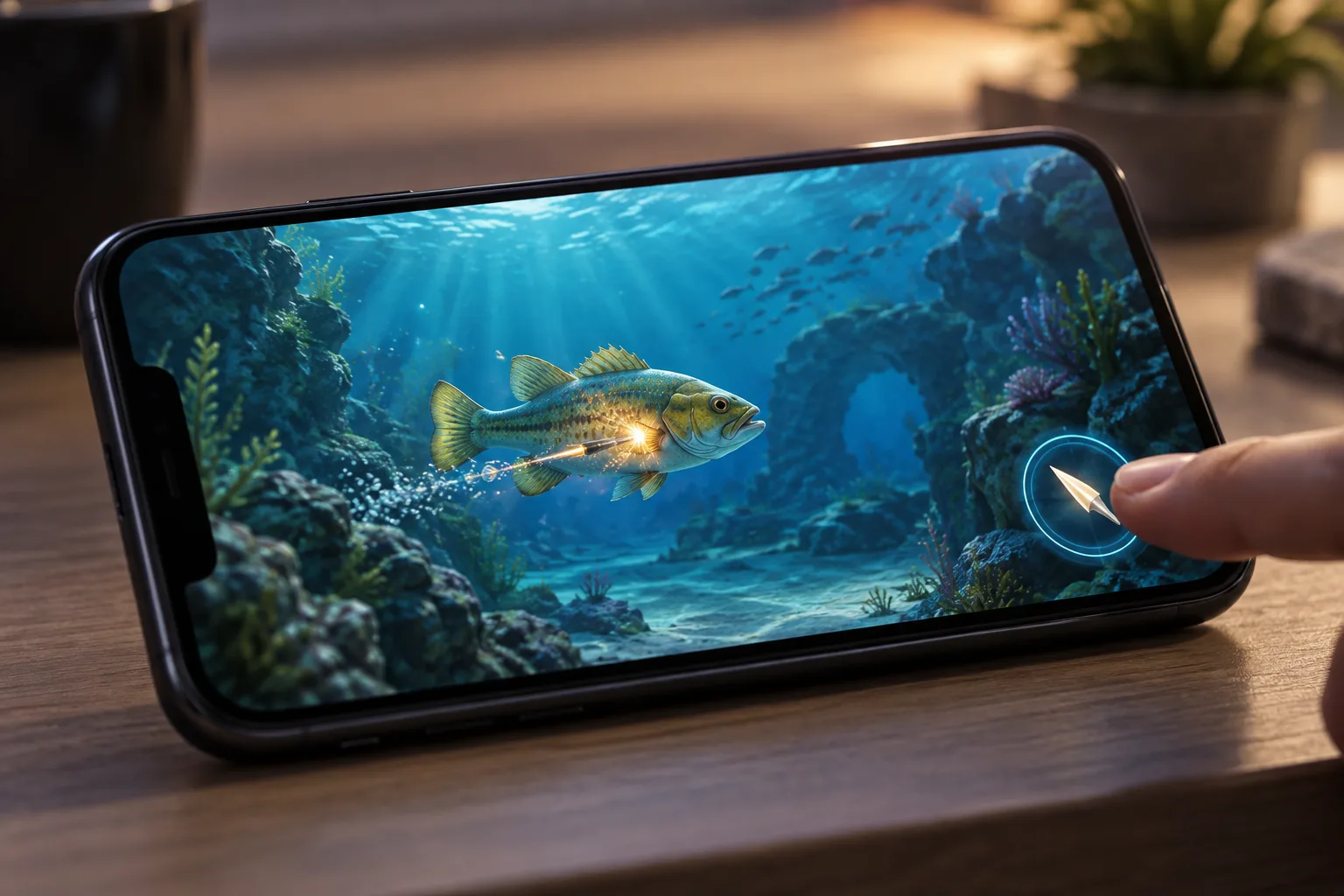
The game must register the shot and apply its capture rules. In some versions, a fish disappears or bursts when captured; in others, a separate award animation confirms the result. A fish that keeps swimming has not produced a prize from that shot, even if the projectile appeared to touch it. Screen motion, overlapping targets, and effects can make visual contact hard to judge, so use the balance and award display to confirm the outcome.
Watch the following states after one manual shot. They form a useful check when the animation moves faster than you can follow:
Confirm the selected shot cost before pressing fire, since changing the cannon value can change the price of the very next projectile.
Press fire once and check that the shot cost leaves the balance, even if the projectile misses every visible fish.
Follow the projectile toward the aim point, while allowing for fish movement between your tap and its arrival.
Check for a confirmed capture and its displayed award, rather than treating a visual collision as proof of payment.
Compare the resulting balance with the starting balance, subtracting shot costs and adding only confirmed awards.
Target lock changes where the cannon aims, while automatic fire changes how often it shoots. Neither control guarantees a catch. Automatic fire can also make a small balance fall quickly because several shot costs may be charged before you have assessed the first result. A single manual shot gives a new player a cleaner way to connect a control action to a balance change.
Calculate the balance after every result
The accounting rule is simple: ending balance equals starting balance minus the cost of all fired shots, plus the awards from confirmed captures. Use the actual displayed cost for each shot if you change cannon value midway. A miss contributes no award. A capture can still leave you behind if its award is smaller than the cost of the shots taken to get it.

Hypothetical worked example: Assume you start with PHP 500, each ordinary shot costs PHP 2, and one captured fish pays eight times that shot value. These are invented conditions for the arithmetic, not terms of a particular game. Fire twelve shots at PHP 2 each: twelve multiplied by two is PHP 24 in shot costs. If exactly one shot captures that fish, its award is eight multiplied by PHP 2, or PHP 16. Your ending balance is PHP 500 minus PHP 24 plus PHP 16, which equals PHP 492.
The capture looked successful, yet the twelve-shot sequence cost PHP 8 overall. If no fish had been captured, the balance would be PHP 476. If two identical captures had occurred under those assumptions, the awards would total PHP 32 and the balance would be PHP 508. These are conditional results, not forecasts; the example does not tell you how likely any outcome is.
Some games express fish values or special-weapon costs differently. Replace the example's multiplier and per-shot cost with the values actually displayed before applying the same balance equation. If you cannot tell what a button charges, leave it alone until the game explains it.
Walk through a first round with PHP 500
For a first round, the useful goal is understanding the controls while preserving enough balance to see several outcomes. Decide in advance how much of the PHP 500 you are prepared to spend on learning. That amount is a personal limit, not a stake the game requires. If a Bonus balance or Free Credits is offered for play, identify which balance funds a shot before using either.
Here is a complete route through one short manual round. It works as a sequence of checks even if the game uses different button names:
Open the game and identify the balance, cannon-value control, fire button, fish values, and exit control before changing any setting.
Select a low displayed shot cost that fits your chosen spending limit, then verify that the value beside the cannon actually changed.
Aim at one moving fish and fire once, noting both the charged shot cost and whether any award appears.
Repeat a small number of manual shots at the same value, counting costs separately from confirmed capture awards.
Stop at your planned limit or exit earlier, then calculate the round's net change from the two totals.
Suppose your planned learning limit is PHP 40 and the selected shot costs PHP 2. Twenty shots would use the full PHP 40 if none paid an award. You do not need to fire twenty: stopping after five gives you information about aiming, timing, and the display for at most PHP 10 in shot costs under those assumptions. Any captured award changes the ending balance, but it does not undo the fact that each fired shot had a cost.
When a smaller cannon beats a stronger one
A smaller cannon value usually makes each ordinary attempt cheaper. With a PHP 500 balance, that can be the better choice while you learn whether tapping fires once, how fast fish move, and how the game confirms a capture. It also makes an accidental burst of repeated shots less costly per projectile. Those advantages concern control and exposure, not a promise of better returns.
A stronger cannon can make sense when the game's displayed award scales with the selected shot value and you knowingly want a larger amount at risk per attempt. Yet a larger potential award is paired with a larger shot cost. If both cost and award simply scale together, raising the cannon value does not, by itself, improve the relationship between the two. Any different capture behavior would need to be stated by that game; it should not be inferred from the cannon's size.
Manual fire is useful when you want to inspect each result. Automatic fire is useful when repeated shots are deliberate and you can monitor the accumulating cost. For a first PHP 500 session, the trade-off is mainly pace: automation saves taps but leaves less time to notice a mistaken cannon value or an unclear award. Turn it off or exit if the balance is changing faster than you can account for it.
Know what the round has proved
After a short round, you can know which control fired, what each shot cost, how a confirmed capture appeared, and how your balance changed. You cannot establish a reliable future capture rate from a handful of fish, and a visible near miss does not reveal the game's underlying selection process. Keep those two kinds of information separate.
If the ending balance does not match your calculation, review the displayed shot value, any repeated firing, special-weapon charges, and confirmed awards. A clear result should reconcile as starting balance minus charges plus awards. That is the practical rule to carry into the next Fishing Game round, whatever fish happens to cross the screen.