Fishing Game Rules: How Controls Shape Your First Round

Every fired projectile can consume a stake, but a visible hit returns value only when the game registers a capture. That rule matters more than how many fish appear on the screen. With roughly PHP 500 available, a player needs to know what the cannon spends, what the target can return, and when the wallet actually changes. Fishing games vary in their controls and award rules, so treat the instructions on the game you open as the final reference. The walkthrough below shows how to read a typical fish-shooting game without assuming that every version works identically.
Define the unit of play before firing
A fishing game often runs on a continuous screen rather than a sequence of clearly separated spins. Fish move through the scene while players aim a cannon and fire at them. For a first round, the useful unit is a shot or a short burst: note the balance, fire, wait for its result, and note the balance again. This gives you a beginning and an end even when the animation keeps moving.
The cost may attach to each projectile, while a held fire button sends several projectiles. Some versions also offer weapons or special shots with different costs. Check the displayed stake before touching fire. If the interface changes cannon strength, confirm whether it changes the price of each shot, its behavior, or both. A stronger-looking projectile does not establish that it is better value; the game rules must tell you what changes.
Read the panel as a cost map
The screen usually places several pieces of information close together, but they answer different questions. The wallet tells you what remains available. A cannon selector sets or displays the cost of firing. Target labels may show potential awards, while animation shows where a projectile went. None of those displays alone proves that a capture has been paid.
Find the wallet or balance display and note its value before firing, because every later change needs a starting point.
Check whether the wallet separates cash, Free Credits, and Bonus balances before deciding which funds a shot will spend.
Locate the cannon or stake control and confirm the displayed cost after each adjustment, especially before holding the fire button.
Identify the aim, fire, lock-on, and automatic-fire controls that actually appear; their names and availability can vary by game.
Read the target or paytable information to distinguish a possible award from a guaranteed payment for merely touching a fish.
A lock-on control may keep aiming at a selected target, while automatic fire may continue sending shots until stopped or until a game-specific condition ends it. Neither control removes the cost of those shots. If a label is unclear, use the game’s help panel before spending. The point is to identify what each tap authorizes, not to infer a rule from the artwork.
Follow one shot from tap to result
Once the cost is visible, a single manual shot is the clearest way to see the mechanism. The projectile leaves the cannon, travels across the playfield, and may miss, contact a target without capturing it, or trigger a capture. The game’s rules determine which contacts qualify. A fish disappearing after another player’s shot, for example, should not be treated as your payout unless your wallet records the award.
Record the opening wallet balance and choose the lowest shot cost that the interface actually offers for this hypothetical walkthrough.
Aim at a target, press fire once, and check whether the displayed wallet decreases by the stated shot cost.
Watch where the projectile lands, while keeping visual contact separate from the game’s decision to award a capture.
Wait for any capture animation and credit to finish, then compare the wallet with its balance immediately after the debit.
Check the game history or result panel, if available, when the animation and wallet change do not seem to agree.
The essential condition is registered capture, not apparent contact. A shot that misses still costs its stake under a per-projectile model. A shot that hits but does not capture also leaves the debit in place. When a capture is awarded, the game adds the applicable amount according to its paytable and rules. The result is the opening balance minus all shot costs plus all credited awards. You can predict that wallet arithmetic once the debits and awards are known, even though you cannot predict a capture from appearance alone.
Choose the cannon and firing mode for the question you need answered
Manual fire beats a continuous burst when your immediate goal is learning what one shot costs. It lets you observe a single debit and wait for settlement before adding another. Rapid or automatic fire can be useful when you deliberately want a stream of shots at moving targets, but it makes spending harder to track. Holding a button for even a brief moment may authorize multiple charges, depending on how that game fires.
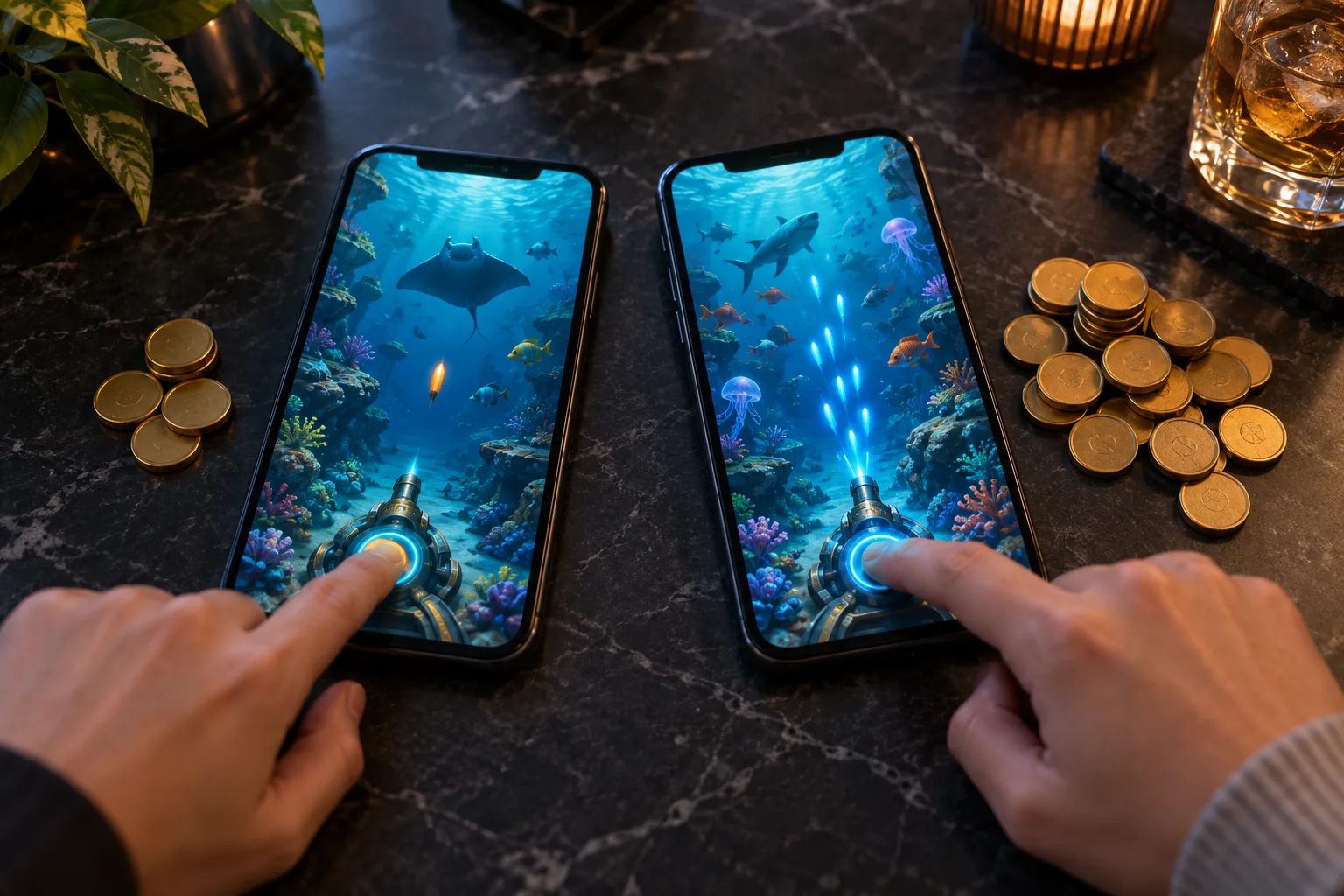
A lower stake preserves more attempts from the same PHP 500 balance. It does not make a target more likely to be captured unless the game’s rules explicitly connect stake size to capture behavior. A higher stake may increase the award attached to a successful shot, yet it also increases what each unsuccessful shot removes. Compare both sides of that exchange rather than choosing a cannon by its size on the screen.
Use one manual shot when you want to verify the displayed stake against the actual wallet debit.
Use a short burst only after you know its per-shot cost and can accept several debits before reviewing the result.
Choose a lower-cost cannon when preserving the number of attempts matters more than increasing the possible award per capture.
Consider a higher-cost cannon only after reading how that setting changes both the shot price and the applicable award.
Target choice has a similar trade-off. A larger displayed multiplier can mean a larger possible credit, but it does not promise that a shot will capture that fish. If the game does not disclose how capture conditions differ among targets, you cannot turn the displayed multiplier into a reliable success forecast. For a first round, observe the cost and outcome rather than assuming a visually prominent target is the best buy.
Hypothetical PHP 500 run: account for every change
Hypothetical worked example: Assume you enter with PHP 500, set aside PHP 100 as the most you are willing to spend in this session, and select a cannon costing PHP 2 per projectile. Assume this particular example pays eight times the shot cost for one captured target. These are invented terms for the arithmetic, not the rules or offer of any real game or operator.

You fire five manual shots. The total cost is five multiplied by PHP 2, or PHP 10, so the wallet falls from PHP 500 to PHP 490. Suppose four shots produce no capture and the fifth captures the target. The hypothetical award is eight multiplied by PHP 2, or PHP 16. The wallet becomes PHP 490 plus PHP 16, which is PHP 506. Relative to the PHP 500 starting balance, that five-shot sequence is PHP 6 ahead. Your PHP 100 spending limit has not been used up; it is a ceiling, not an amount the game automatically takes.
If the fifth shot had touched the fish without registering a capture, there would be no PHP 16 credit. The ending wallet would then be PHP 490, or PHP 10 below the start. That difference is why the capture condition matters. If a game uses a different award formula, substitute its actual rule and recalculate; do not transfer this example’s multiplier to another screen.
Close the round only after pending shots settle
A first round is easier to understand when it ends at a deliberate checkpoint. Stop firing, allow visible projectiles and capture animations to finish, and read the wallet again. Otherwise, a late credit may look missing, or a final debit may appear after you thought play had stopped. If the game provides a history panel, its recorded sequence can help connect each charge to each award.
Release any held fire control and switch off automatic fire before treating the wallet as the final balance.
Allow projectiles and award animations already in progress to settle before comparing the closing wallet with the opening figure.
Add the costs of every shot and the credits from registered captures to check whether the displayed balance follows the rules.
Stop at the spending limit you chose before play, even if a target remains on screen or a capture just occurred.
For a player working with PHP 500, the clearest first experience is a small, observable sequence. One shot establishes the cost; a settled result shows whether it earned a credit; the wallet shows the net effect. After that, faster controls become a choice with a known price per projectile. The game still decides captures under its own rules, but the accounting should no longer be a mystery.